
Although spring is bringing us a greater variety and quantity of fresh produce, the availability of it cannot be guaranteed because of the lockdown and all its consequences. Necessity is the mother of invention – or just an incitement to remember some great old tricks.
And the ‘trick’ of today is sprouting. Almost every whole food (that is, not spaghetti or tinned pineapple, for example) that you have in your cupboard could be sproutable: chickpeas, lentils, mung beans (but not ‘normal’ beans, such as pinto, cannellini or red kidney beans, which have to be cooked before eating) or marrowfat peas; broccoli, onion or alfalfa seeds; fenugreek, sunflower or poppy seeds; oat, barley, rye, wheat or buckwheat grains; and even onions, scallions or garlic…
Sprouting increases the quantity of vitamins, minerals, antioxidants, and active enzymes already present in these foods. Furthermore, it considerably increases the bioavailability and absorption of certain minerals, such as calcium, iron, and zinc, by breaking down phytic acid, a compound which binds to these minerals and thus makes them less absorbable by the body.
General rule for sprouting seeds, grains or pulses is to rinse them, soak them for 24 hours, drain the water, rinse again, place them in a covered but not airtight container, and keep them in a warm place. Continue rinsing and draining 1-2 times a day until the sprouts are the size you want. Depending on what you are sprouting, it can take 2-5 days.
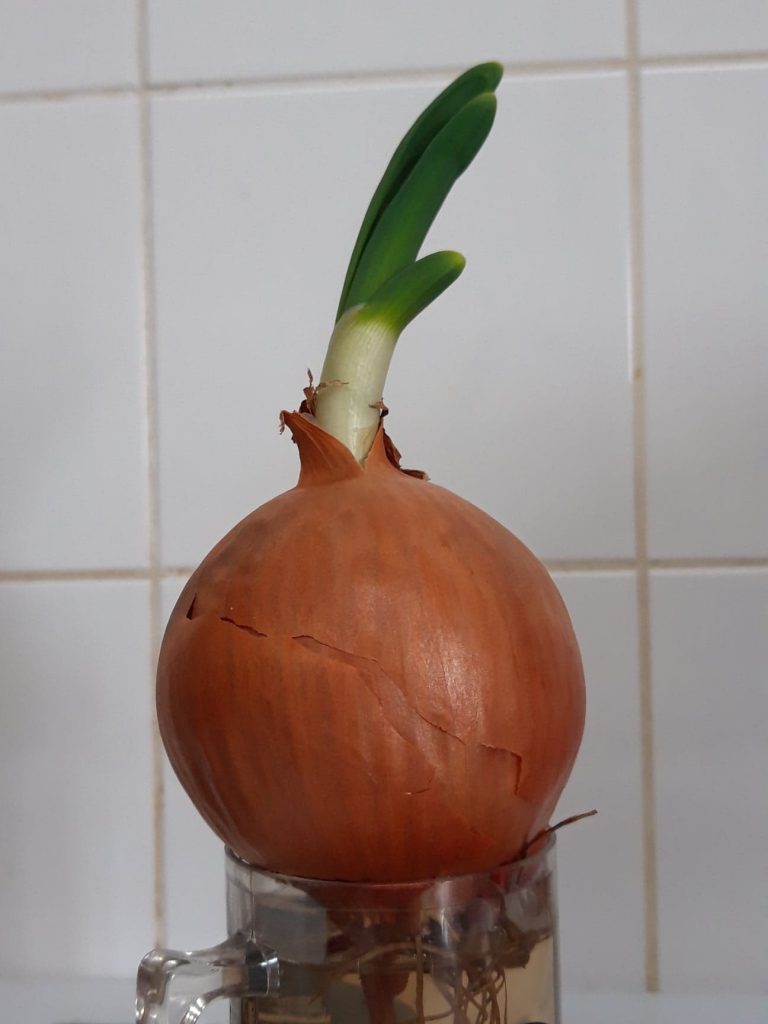
And the general rule for sprouting onions is to forget them in a dark corner of your larder, ‘discover’ them with pale green thingies sticking out of the top, and then place them on a windowsill with the end opposite to the green thingies immersed in water.
And voilà – nutritional powerhouses at your service!
Recent Comments